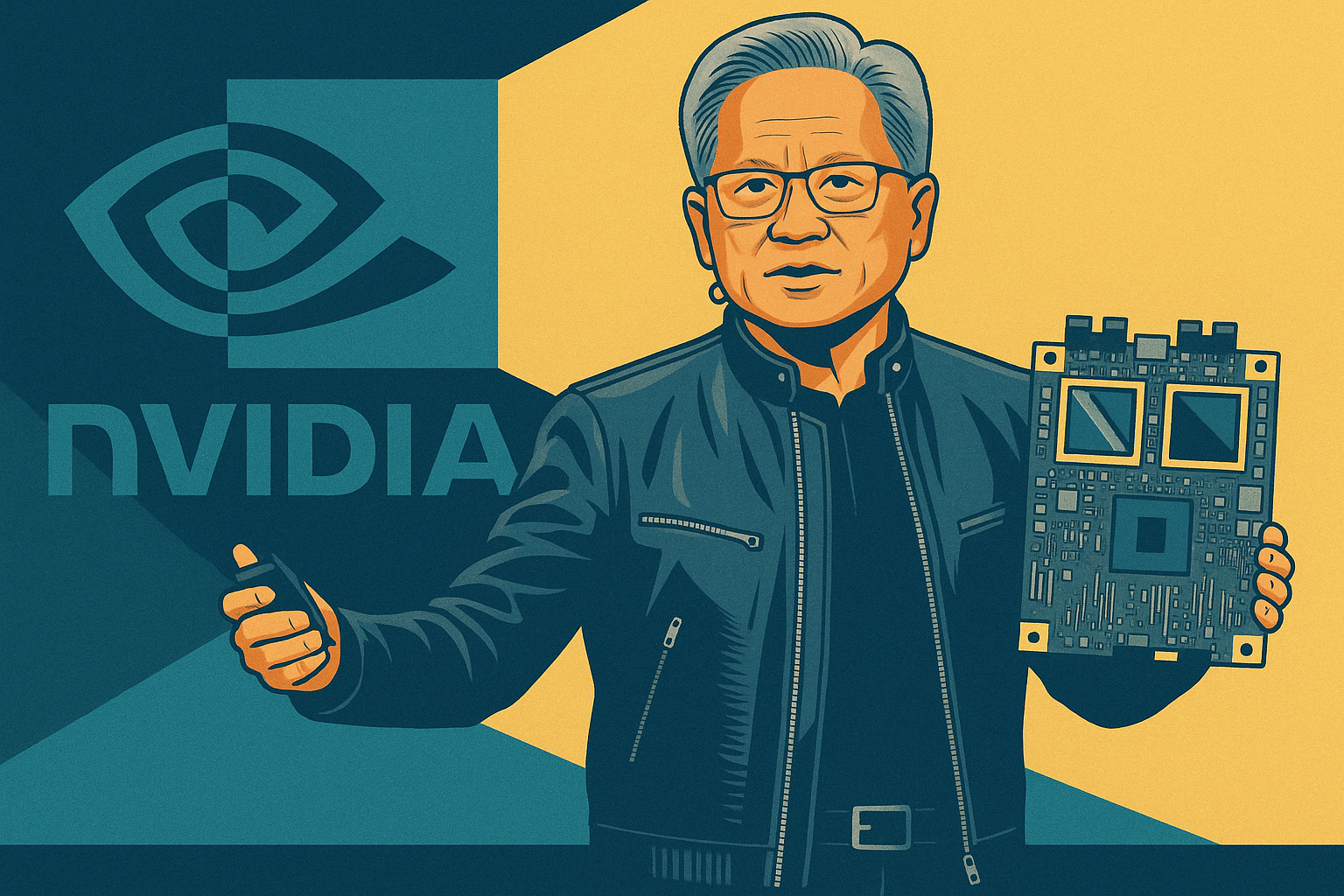
Nvidia will invest up to $100 billion in OpenAI as part of a sweeping new partnership that ties together two of the most influential companies in artificial intelligence.
The companies announced on Monday that the agreement, framed as a letter of intent, will see OpenAI build at least 10 gigawatts of AI data centres using Nvidia’s latest systems. In return, Nvidia will progressively invest in OpenAI as each gigawatt of computing capacity comes online, with total commitments potentially reaching $100 billion.
The first of these facilities is expected to be operational in the second half of 2026, powered by Nvidia’s upcoming “Vera Rubin” platform. Nvidia will also become a preferred compute and networking partner for OpenAI, with both companies pledging to align their hardware and software roadmaps.
Sam Altman, chief executive of OpenAI, said: “Our mission is to ensure artificial intelligence benefits all of humanity. Working with Nvidia to scale up the next generation of infrastructure is a vital step toward that future.” Jensen Huang, Nvidia’s founder and chief executive, added that the partnership represented “the next era of accelerated computing” and underscored the scale of investment needed to advance AI research and deployment.
While the agreement marks a major escalation in the AI arms race, it remains at the memorandum stage. Details on ownership structure, equity rights, and deployment milestones have yet to be fully disclosed. Nvidia’s investment is expected to take the form of a mix of hardware provision and financial capital rather than an upfront cash transaction.
Analysts note that the energy requirements of a 10-gigawatt deployment raise significant questions about siting, sustainability, and grid capacity. Large-scale data centres already face scrutiny over carbon impact and local infrastructure demands. Regulatory review may also follow given Nvidia’s dominant position in AI hardware and the concentration of resources between a small number of companies.
The deal could reshape OpenAI’s dependency profile. To date, the company has leaned heavily on Microsoft for infrastructure and funding, including the cloud supercomputer announced under the “Stargate” initiative. Nvidia’s role as both supplier and investor signals a shift towards diversified backing as competition for compute power intensifies.
For Nvidia, the investment ties its hardware future directly to the growth trajectory of one of AI’s leading developers, creating both opportunity and risk. Execution challenges, from supply chain bottlenecks to regulatory oversight, could affect the rollout.
As details develop, the agreement underscores the growing convergence of capital, hardware, and research in shaping the AI landscape — with two of its most powerful players now moving in tandem.