Morrisons has become the first UK retailer to deploy Instacart’s AI-powered Caper smart trolleys, bringing computer vision, basket tracking, and checkout technology into a physical grocery store.
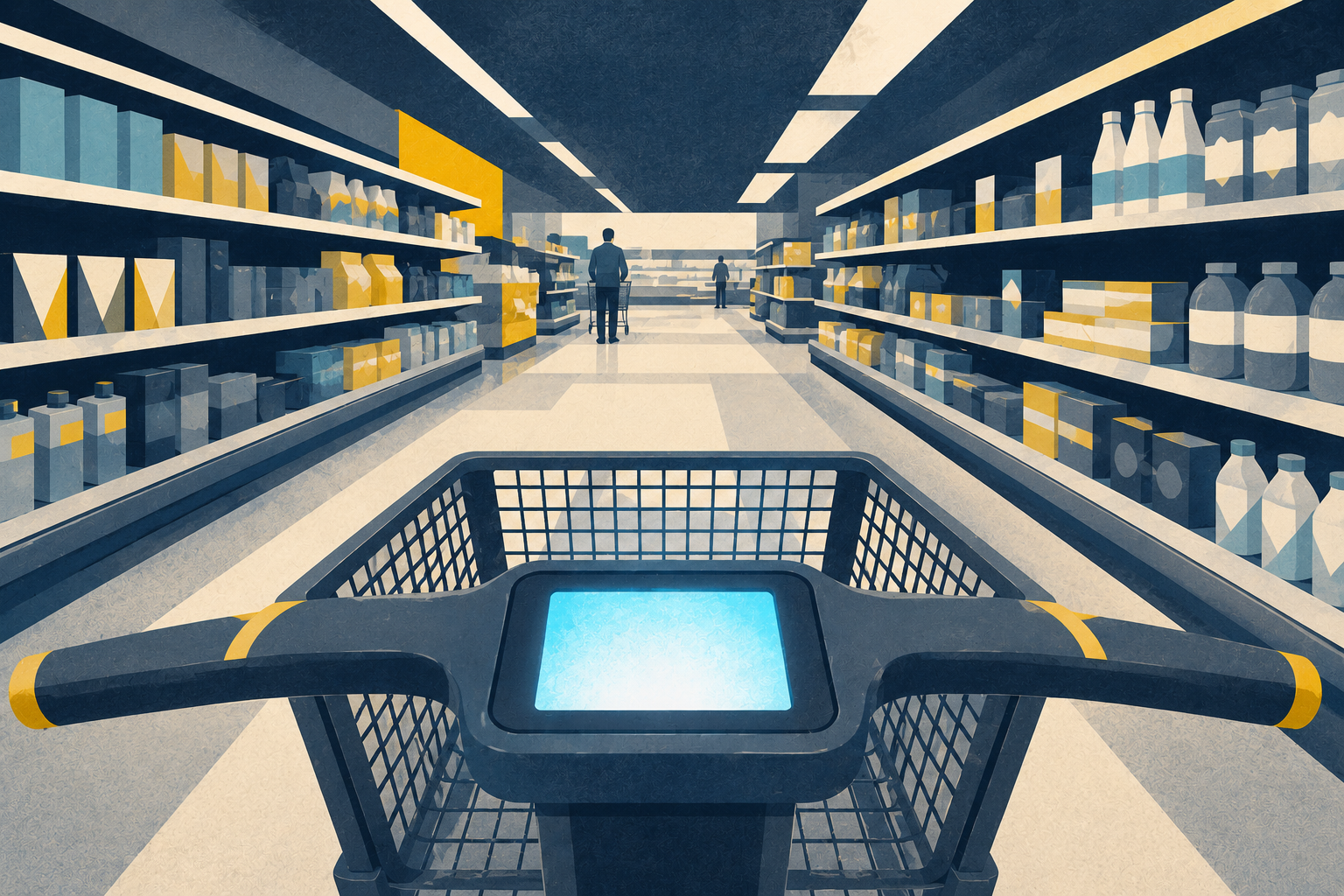
The trial has launched at Morrisons Preston. The trolleys use cameras, scales, sensors, and a screen to identify items as customers shop, show a running basket total, weigh loose produce, surface offers, and allow shoppers to check out without unloading a full trolley at a conventional till.
Instacart has already deployed Caper Carts with retailers in North America and Australia. Its partnership with Morrisons marks its first UK retail deployment and follows an earlier announcement that the technology would be piloted in one UK store.
The proposition addresses one of the most persistent points of friction in grocery: the trade-off between convenience, cost awareness, and speed. UK shoppers have become more price-conscious during a prolonged period of food inflation and household pressure, while supermarkets are trying to improve store productivity without weakening service.
Real-time basket totals may become one of the more practical features. Customers trying to manage a budget often discover the full cost of a shop only at checkout. Showing spend as items are added could change behaviour in the aisle, particularly for families trading between brands, promotions, and essentials.
The technology also gives retailers another route to personalisation. A trolley screen linked with loyalty data can surface promotions, recommendations, and product information during the shop itself, rather than relying only on apps, email, or shelf-edge signage. That can increase relevance, but it also raises questions about privacy, consent, targeting, and whether customers experience the intervention as useful or intrusive.
The pressure on customer experience leaders to build trust around AI is already increasing as companies adopt automation inside service journeys. Smart trolleys are a physical version of the same test. The technology can reduce friction, but it has to work reliably in a busy store and preserve enough customer control to build confidence.
Retail AI has often been discussed through ecommerce, search, supply forecasting, and customer service chatbots. The Morrisons trial brings the focus back into stores, where margins are thin, labour is expensive, theft risk is real, and customer behaviour is less predictable than online clicks.
Operational execution will decide the value of the trial. Smart trolleys need charging, cleaning, maintenance, customer explanation, system availability, theft prevention, and integration with checkout and loyalty infrastructure. Staff will need to support customers unfamiliar with the technology, troubleshoot errors, and manage exceptions around misidentified items or payment problems.
The trial also comes as supermarkets review the balance between self-service and staffed service. Self-checkouts increased throughput but also created frustration for some shoppers, particularly when assistance is needed repeatedly. Smart trolleys could reduce scanning friction, although they may introduce a different form of complexity if customers do not trust item recognition or the checkout process.
Morrisons is operating in a highly contested grocery market, with discounters, loyalty pricing, online delivery, convenience formats, and food to go all competing for attention. A smoother in-store journey can support differentiation, but the test will be whether customers use the trolleys repeatedly after novelty fades.
The data generated by smart trolleys may also become valuable. Retailers can learn more about aisle behaviour, abandoned products, promotion effectiveness, and shopping sequences. That insight can improve merchandising and operations, but data governance will need to be clear, particularly when individual loyalty accounts are involved.
The Preston trial is an operational test of whether AI can improve the economics and experience of physical grocery retail at the same time. If the carts reduce checkout friction, improve basket visibility, and support trusted personalisation, wider deployment could follow. If they add complexity or raise trust concerns, the store will remain a reminder that AI in retail succeeds only when it fits the reality of the shop floor.