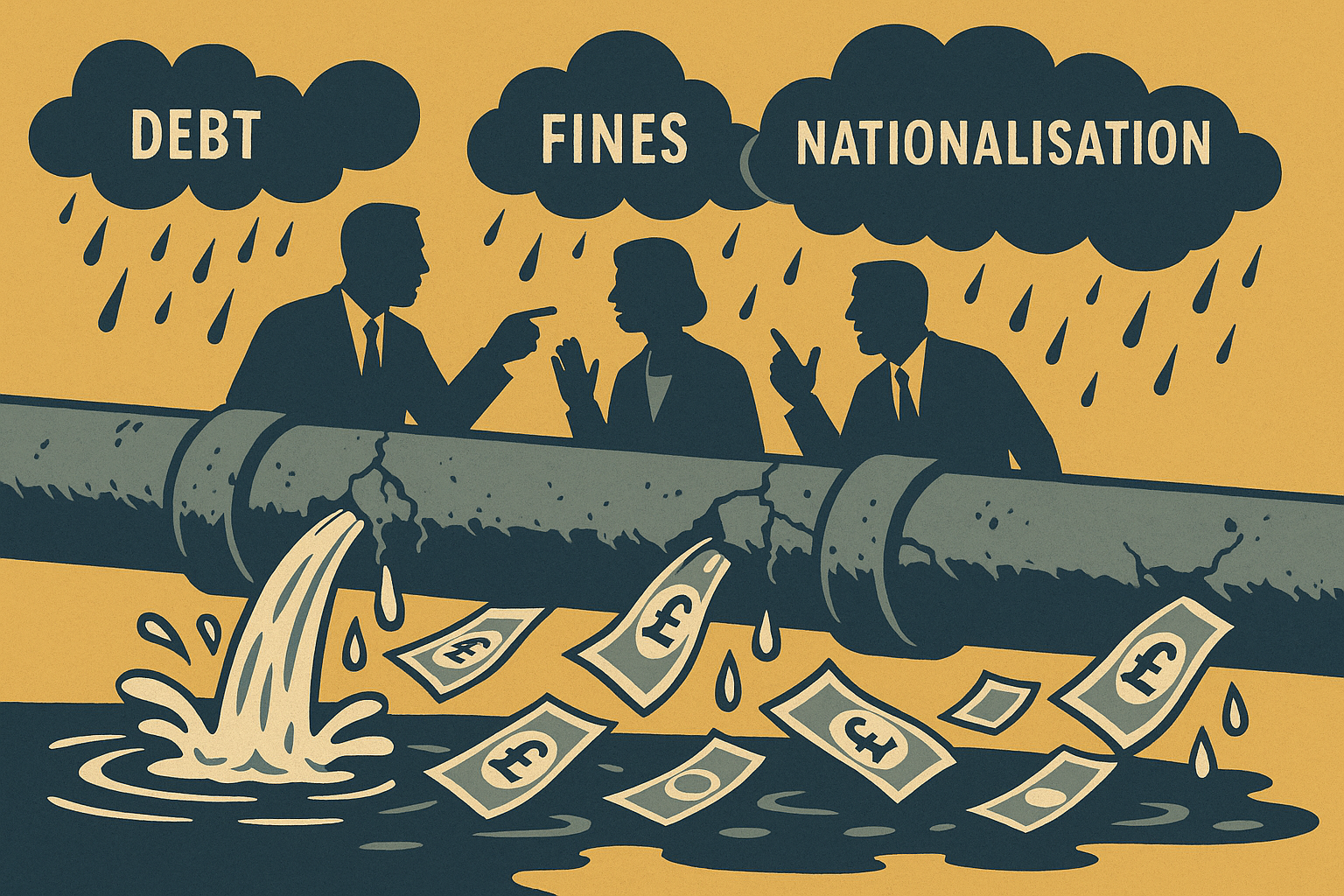
U.S. private equity giant KKR has pulled out of talks to inject billions into Thames Water, in a fresh blow to the struggling utility’s attempts to avoid collapse. The withdrawal leaves Thames reliant on a debt-for-equity rescue plan led by its super-senior creditors — with a state bailout looming if no deal is struck by the end of June.
The move, confirmed on Monday evening, ends two months of exclusive negotiations and eliminates what had been the most concrete investor proposal on the table. KKR’s decision was reportedly driven by mounting regulatory uncertainty, political scrutiny, and unease over Thames Water’s long-term liabilities.
The utility — which serves a quarter of England’s population — is now progressing talks with creditors behind a £3 billion emergency loan package agreed in March. That plan, if approved, could see hedge funds including Silver Point and Elliott Management take control of the company via a debt-for-equity swap. Up to £2.5 billion of new equity is understood to be under discussion, though no terms have been finalised.
Sir Adrian Montague, chair of Thames Water’s holding company Kemble, said the firm would now “progress discussions on the senior-creditor plan with Ofwat and other stakeholders”.
Bond markets reacted sharply. Thames’s 2040 sterling bond fell 4p to a record low of 69p in the pound, while its April 2027 euro note dropped below 68 cents. Traders now estimate a 60% probability of Thames being placed into special administration — a temporary form of nationalisation — by year-end.
KKR’s exit comes just days after Ofwat issued a £122.7 million penalty to Thames for failing to reduce sewage discharges and paying unlawful dividends. The company recorded more than 300,000 hours of raw sewage spills in 2024 — the worst of any UK water firm. The regulator described the failures as “unacceptable”, while Environment Secretary Steve Reed said he was “not ruling anything out” when asked if state intervention was likely.
Sources close to the investor talks said KKR had become increasingly concerned by three core risks: the scale of prospective fines tied to legacy environmental breaches; Thames’s appeal for a 40% increase in customer bills by 2030, which remains under review by Ofwat; and the prospect of a Labour government pressing for public ownership.
Ministers continue to resist full nationalisation, but the government has confirmed that contingency plans are in place. A Special Administration Regime — last used during the 2021 collapse of energy firm Bulb — would allow Thames’s operations to continue under public control while a long-term solution is found.
With a final funding deadline of 30 June looming, the next major flashpoint will come on 25 June, when Ofwat publishes its draft determinations on pricing for the 2025–30 period. If Thames’s proposed bill hikes are not approved, analysts warn, private capital may walk away entirely — leaving taxpayers to pick up the tab for decades of underinvestment.