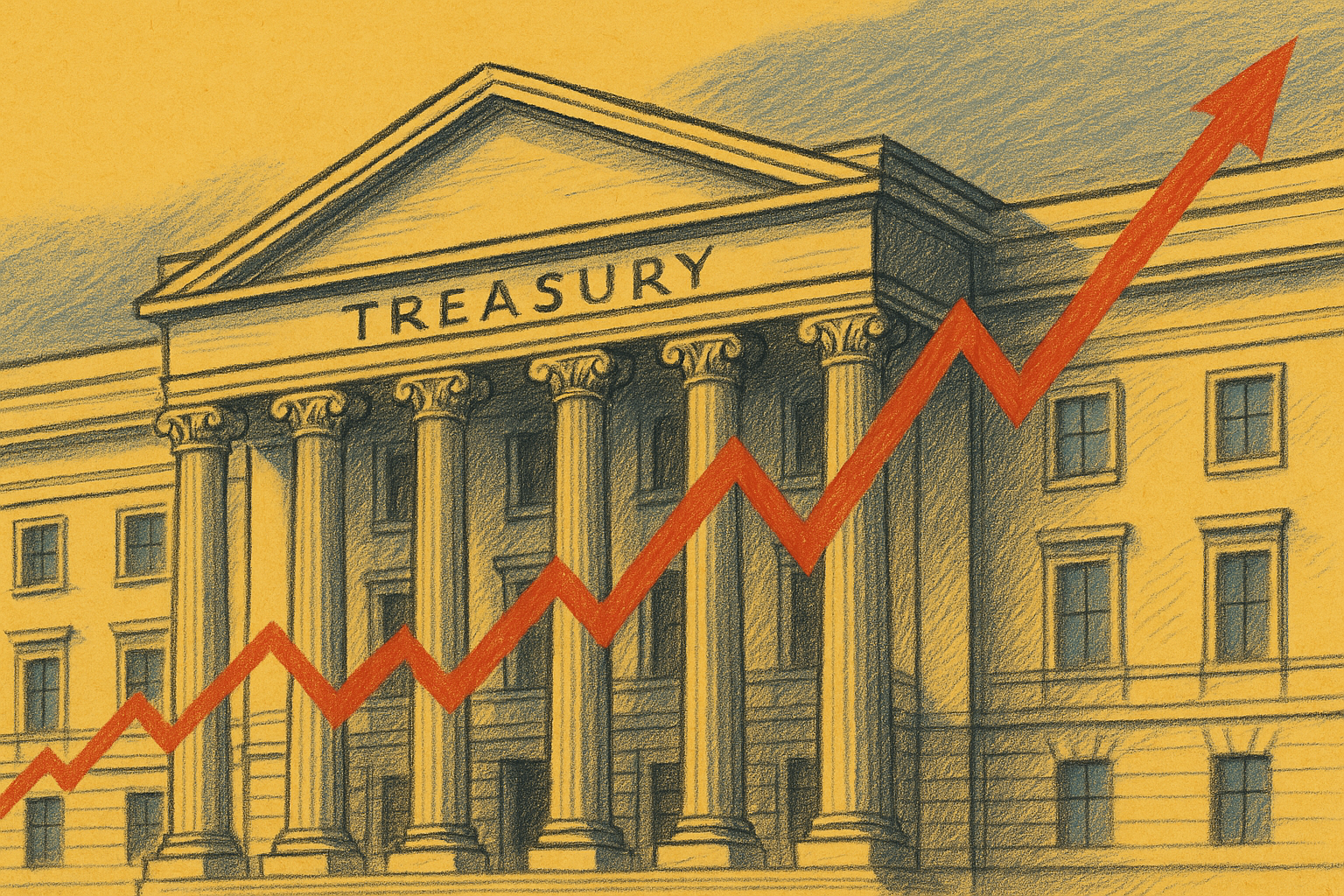
Government borrowing in May increased to £17.7bn, driven by Labour’s spending. This was the second-highest May borrowing figure recorded in over 30 years and exceeded the Office for Budget Responsibility’s (OBR) predictions. Data from the Office for National Statistics indicated that a persistent deficit in day-to-day spending has contributed to national debt increasing by 0.5 percentage points compared to the previous year.
In May, the government collected an additional £10bn from taxpayers compared to a year ago, illustrating the impact of higher taxes on boosting government funds. These figures are expected to strain public finances further, as increased borrowing aggravates public debt.
Darren Jones, Chief Secretary to the Treasury, stated that the government was implementing changes to improve the financial situation of Britons. He emphasised that since taking office, decisions had been made to protect working people, begin NHS repairs, and rebuild Britain. Now, the focus is on ensuring the economy benefits working people.
City analysts suggest that Reeves might need to raise taxes later in the year following commitments made in the Spending Review. Deutsche Bank predicts an additional £10bn may be required for the NHS and schools, while KPMG estimates an extra £20bn might be needed from taxpayers. Alex Kerr of Capital Economics noted that recent policy decisions could lead to tax increases.
Banks and investors might be targeted in the autumn, with the possible removal of a £500 allowance on dividends. Analysts at St James’ Place warned that raising the highest tax rate on dividends could backfire and reduce revenue. David Postings, CEO of UK Finance, cautioned that increasing taxes on banks could make them less competitive compared to German and French counterparts, undermining London’s position as a financial hub.
Rachael Griffin from Quilter pointed out that rising tax receipts indicate an increasing tax burden due to fiscal drag. Despite no new headline tax rises, receipts continue to rise due to static thresholds and reduced allowances. With income tax thresholds frozen, many workers are paying more tax on their earnings due to modest wage increases that don’t keep pace with inflation.
Analysts have also highlighted risks to the Treasury’s growth ambitions due to changes in fiscal rules impacting non-domiciled residents, causing wealthy investors to leave the UK. The Centre for Economic and Business Research warned of a potential £8bn shortfall from abolishing non-dom status. The Adam Smith Institute found that ending tax exemptions for wealthy foreign investors could cost the UK economy up to £111bn over the next decade.
An alternative for the Chancellor at the Autumn Budget is adjusting fiscal rules, as recommended by the OECD. However, this could lead to increased borrowing and higher debt interest payments, with the government already spending twice as much on borrowing costs as on defence.