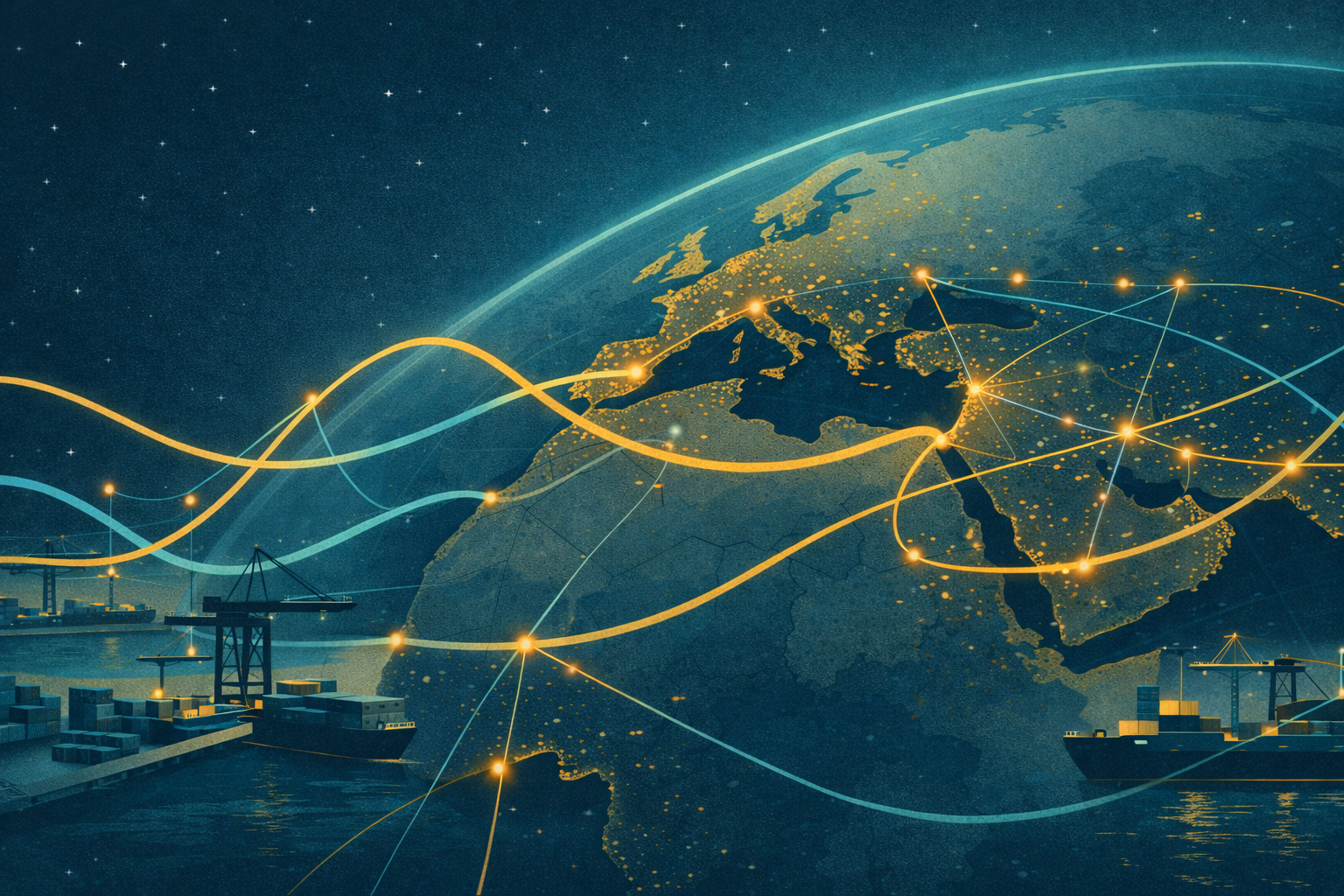
Extreme heat, drought and falling river levels are increasing operational pressure across Europe, with disruption spreading through freight networks, power generation, agriculture and industrial supply chains during another period of exceptional summer temperatures.
Low water levels on the Rhine have constrained cargo movements, forcing some vessels to carry reduced loads and increasing the cost of moving commodities and industrial materials along one of Europe’s most important commercial waterways. Manufacturers, energy businesses and distributors that depend on inland shipping between major industrial centres are consequently facing tighter transport capacity at a time when other climate-related pressures are also building.
The effects extend well beyond freight. High temperatures are increasing electricity demand for cooling while placing additional strain on generation infrastructure, and water availability can constrain thermal and nuclear production. Drought is also affecting agricultural output, adding another source of volatility to food and commodity markets.
Temperatures have exceeded 40°C in parts of Europe during the latest heatwave, while unusually low water levels have affected several major rivers. Wildfires and prolonged dry conditions have compounded the disruption across parts of the continent, adding physical risk to an economic environment already characterised by uneven growth and cautious investment.
The economic consequences are becoming easier to quantify. Research involving the University of Mannheim and European Central Bank economists has estimated that heatwaves, drought and flooding experienced during last summer reduced European output by around 0.3%, with cumulative losses potentially reaching about 0.8% by 2029.
Those losses are distributed unevenly. Manufacturing businesses can face interruptions to water-intensive processes, energy supply and transport, while agriculture carries direct exposure to drought and heat. Retailers and food producers may then encounter changing input costs, and logistics operators have to manage reduced river capacity, route changes and tighter transport availability when conditions deteriorate.
The Rhine is particularly important because it connects major industrial regions in Germany, Switzerland, France and the Netherlands with North Sea ports. Barges carry fuels, chemicals, minerals, agricultural commodities and industrial inputs, often at lower cost than road or rail. When falling water restricts vessel capacity, companies may require more sailings or alternative transport to move the same volume.
Additional freight costs can be absorbed temporarily, passed through to customers or reflected in production decisions, depending on contract structures and pricing power. Companies operating lean inventories have less room to absorb delays when an established transport route becomes constrained, particularly where critical materials are sourced through a narrow set of suppliers.
Recent UK research has shown similar physical risks reaching day-to-day commercial operations. Four in five businesses surveyed by Ecologi and BusinessGreen had experienced climate-related disruption during the previous two years, with consequences including higher costs and reduced revenues.
Europe’s current conditions also draw a clearer distinction between decarbonisation and adaptation. Reducing emissions remains a long-term capital, technology and policy challenge, while adapting to physical climate disruption requires organisations to work with conditions already affecting transport routes, buildings, energy systems, employees and suppliers.
Responsibility therefore extends well beyond sustainability teams. Procurement functions need visibility over vulnerable routes and concentrated suppliers, finance teams need to understand insurance, working capital and cost exposure, operations teams require continuity plans, and property managers may have to reassess cooling, water use and site resilience.
Insurance markets provide another signal of changing risk. Demand for mechanisms that transfer weather-related exposure is increasing, while catastrophe bonds and other insurance-linked securities are attracting attention as the financial cost of physical climate events becomes more material.
Climate disruption rarely remains contained within a single budget line. Higher transport costs can coincide with increased energy demand, inventory changes, lost production, insurance claims and supplier failures. A site can remain physically undamaged while still losing output because an upstream supplier, river route or electricity system has been affected.
Capital investment decisions are beginning to reflect those dependencies more explicitly. Warehouse location, cooling capacity, backup power, water use, transport alternatives and supplier concentration can alter exposure long before an extreme-weather event appears in an annual risk disclosure.
Companies with complex European supply chains are also being pushed towards greater redundancy after years in which efficiency and inventory minimisation dominated operating models. Holding more stock, adding alternative transport routes or maintaining spare capacity creates costs of its own, yet recurrent disruption can make those costs easier to justify against the potential loss of production.
The challenge is particularly acute where infrastructure was designed around historic climate patterns. Rivers, power networks, buildings and transport assets built for more moderate conditions may require investment as periods of extreme heat become more frequent and prolonged.
Europe’s increasingly volatile summers are making those constraints more visible. River levels can recover when rainfall returns, but recurring combinations of heat, drought, fire and infrastructure pressure are embedding physical climate exposure more deeply in operational planning, procurement decisions and capital allocation.