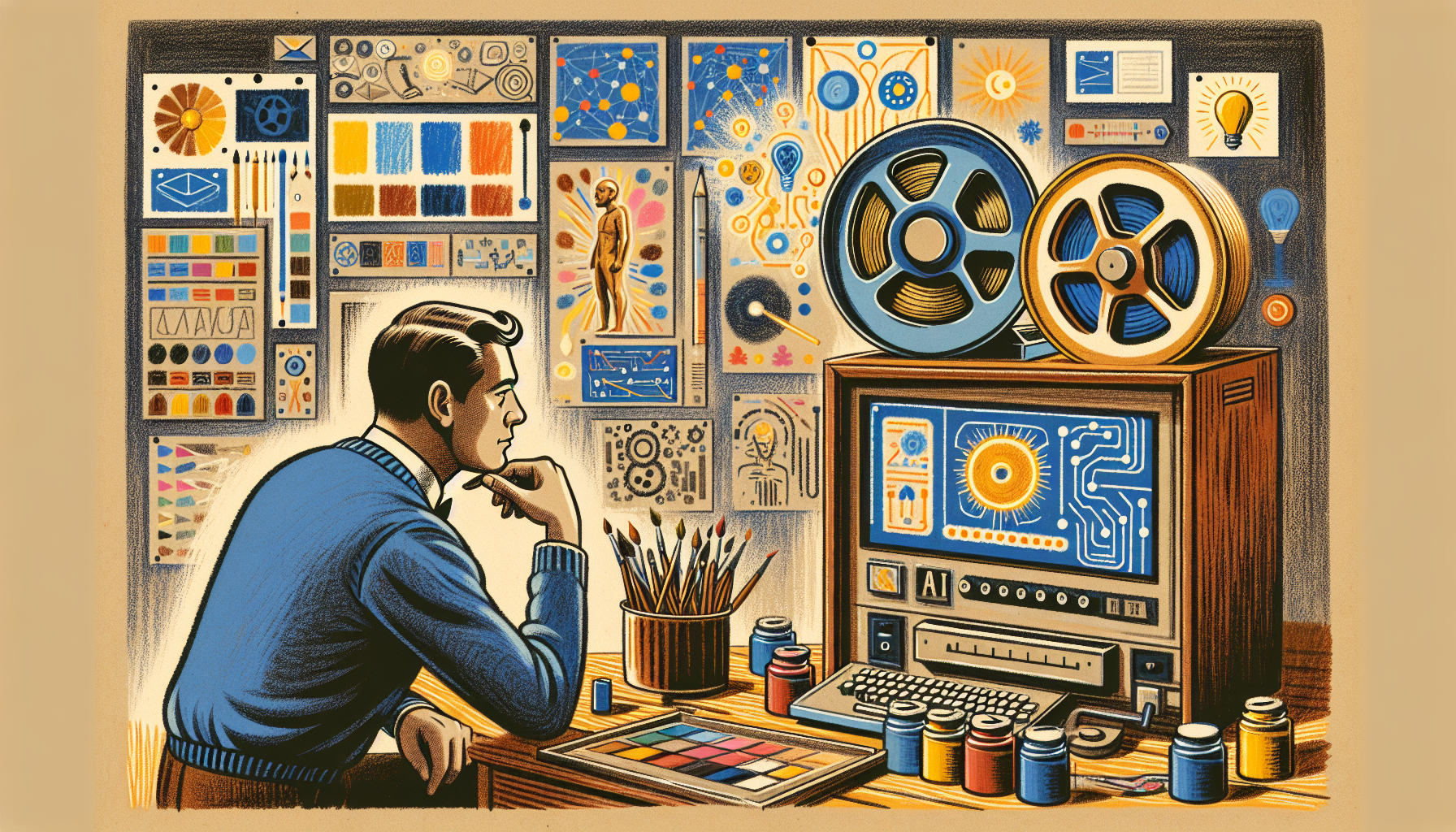
As artificial intelligence persistently transforms the creative realm, a significant conversation is emerging regarding the importance of human engagement in this changing digital environment. The British Council has taken a definitive position on the relevance of artists, not solely as participants in AI, but as vital contributors to its evolution and consequences.
This perspective marks a transition from perceiving AI as an outside force affecting art to acknowledging art’s capacity to reshape AI. Hannah Andrews, the British Council’s Director of Digital Innovation in Arts, articulated at a SXSW London panel that the emphasis is on altering the common inquiry, “What is the influence of AI on art?” to “What is the influence of art on AI?”
Andrews asserted that this transition is not just a matter of wording but essential. “Artists truly modify technologies,” she remarked, “not merely through experimentation, but by changing public perceptions.”
This transformation reflects major developments in creativity. The present AI wave can be compared to the shift when photography and film first emerged as artistic mediums, challenging the limits of human creativity. While photography depends on composition and choice of subjects for its artistry, AI’s creative power is now directed towards curating, proposing, and selecting variables. In a manner akin to the artistic evolution instigated by movements like Marcel Duchamp’s ‘readymades,’ AI-generated creations prompt us to broaden the definition of art and, importantly, the position of the artist within it.
Dr. Laura Herman, Adobe’s Head of AI Research, joined Andrews on the panel to discuss Adobe’s emphasis on co-creation. Instead of simply providing new prototypes for input, Herman mentioned that her team engages artists early in the design phase. “The finest outcomes of our team are sometimes endeavors we haven’t launched because the creative community expressed they wouldn’t be beneficial.” Adobe’s human-focused strategy extends to training data, as the company utilizes only licensed content to address artists’ intellectual property concerns, a contentious matter since AI systems have been trained on extensive datasets, often containing copyrighted material. Recent UK legislative efforts to call for transparency in AI training data, led by Baroness Beeban Kidron, faced governmental opposition, leading to public uproar, with creatives like Elton John and Dua Lipa denouncing the policy as equivalent to “criminal” acts (source).
Both Herman and Andrews concur that artists provide more than mere aesthetics. “They are imaginative, critical, and culturally conscious,” Herman remarked, noting that critique of their tools is welcomed to encourage advancements. Andrews highlighted that creating sustainable, resilient technologies requires ensuring they embody a variety of cultural expressions and values. Herman referenced collaboration with the ‘inclusive AI lab,’ intending to develop AI systems in partnership with civic participants from the Global South, underscoring the significance of intentional design in establishing ethical AI.
For Andrews, cultivating AI innovation necessitates investment in artists as individuals, beyond their functions as project contributors. “This human framework is vital for a sustainable AI future,” she asserted.
Despite these viewpoints, the connection between AI and art remains debatable. Designers like Andy Blackmore warn that AI presents a fundamental threat to the art world. He contends that AI is not just a tool but a “perilous force” that could eradicate human creativity and presence in art. Anxiety surrounding AI’s unpredictable conduct and potential breaches of ethical standards have escalated within the industry.
While the British Council and Adobe highlight the proactive role of artists in AI’s evolution, the broader landscape remains ambiguous. Legal disputes over intellectual property continue, government inaction has exasperated creators, and the ethical ramifications of AI persist as a looming concern. Successfully striking a balance between swift innovation and respect for artists’ rights while preserving human agency will be crucial to the UK’s cultural success in the arts.