European investors welcomed a rare moment of relief on Monday after the United States and China agreed to pause their escalating trade conflict. The announcement of a 90-day tariff truce helped lift equity markets across the continent, with the pan-European STOXX 600 index closing 0.9% higher, Germany’s DAX up 1.1%, and France’s CAC 40 gaining 1.3%.
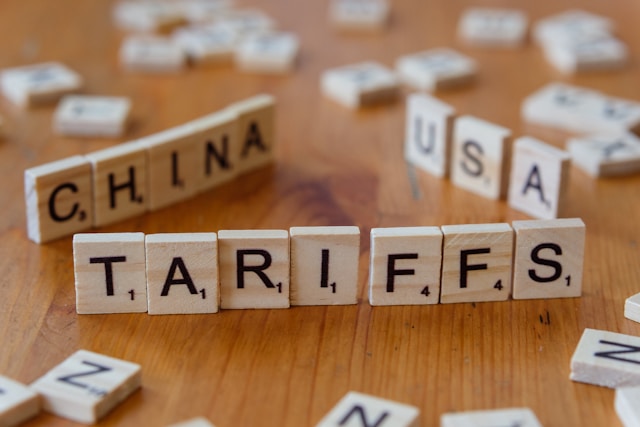
Under the agreement, reached during informal talks in Geneva over the weekend, the US will scale back some of its recent tariff increases, capping its duties on Chinese imports at a combined 30%. In return, China has pledged to reduce its retaliatory tariffs to 10% and resume certain purchases of US goods, including agricultural commodities and semiconductor equipment. While no formal deal has been signed, the truce marks a notable de-escalation after months of tit-for-tat measures that had spooked global markets and raised fears of a deeper economic slowdown.
For Europe, the reprieve is welcome news. As an export-oriented region heavily dependent on global trade flows, the eurozone economy has been caught in the crossfire of tariff uncertainty. Germany, in particular, remains vulnerable, with manufacturing orders and investor confidence closely tied to Asian and US demand. Several European industrial giants — including BASF, Siemens, and Volkswagen — have cited US–China tensions as key factors weighing on forward guidance this year.
The truce also comes at a sensitive moment for the European Central Bank, which has maintained a cautious stance on rate cuts amid sticky inflation and uneven economic data across the bloc. A prolonged trade war could have pushed policymakers closer to monetary loosening. While the latest development eases immediate pressure, markets remain jittery about the longer-term outlook, especially as global elections and protectionist rhetoric continue to shape 2025.
Investors also took cues from commodity and currency markets, with Brent crude rising to $85 per barrel and the euro firming slightly against the dollar. Shares in European luxury goods companies — many of which rely on Chinese demand — posted modest gains, as did semiconductor and machinery stocks with significant US and Asian exposure.
Despite the upbeat reaction, analysts warn that the truce remains fragile. The agreement is time-limited and non-binding, and major structural disagreements — particularly around technology access, data policy, and industrial subsidies — remain unresolved. Any flare-up could quickly reverse market gains and reintroduce volatility.
From a geopolitical standpoint, the temporary détente underscores Europe’s delicate position in the evolving global trade architecture. While the EU has sought to chart its own course through new bilateral agreements — including ongoing negotiations with India and Mercosur — it remains exposed to trade distortions generated by US–China brinkmanship. A divided global trading system also complicates supply chain planning, investment decisions, and regulatory alignment for multinationals operating across multiple blocs.
European policymakers have yet to issue formal statements in response to the truce, but senior EU officials have repeatedly stressed the importance of predictable, rules-based trade. With elections approaching in several EU member states, and global economic headwinds gathering, a reduction in trade tensions — however temporary — offers a much-needed reprieve.